
As reported in our previous newsletter, our thermal imaging camera has been used by Alana Wheat and Xander Wood, who had just brought their first home and were excited to finally get to use the camera to check over sources of heat loss before starting on refurbishments.
An initial thermal imaging assessment revealed significant heat loss areas and outdated systems in the new home, which guided their plans for future refurbishments.
These included pipes on outside walls, draughts and heat loss around air bricks, as well as a lack of underfloor insulation, in addition to the more obvious problem of an outdated heating system, a poorly insulated loft hatch and a bay window with cracks allowing draughts.
They’ve since introduced upgrades to the heating and plumbing systems, which have improved heating efficiency and reduced heat loss.
A key part of the survey is their set of reflections on the process. These stress the importance of thorough documentation and accurate temperature testing. More photos during the process would have been helpful; temperature spots are crucial for accurate comparison, while testing temperatures before taking photos is essential to avoid inaccuracies.
To see their full report with all the relevant thermal images, follow the link below:
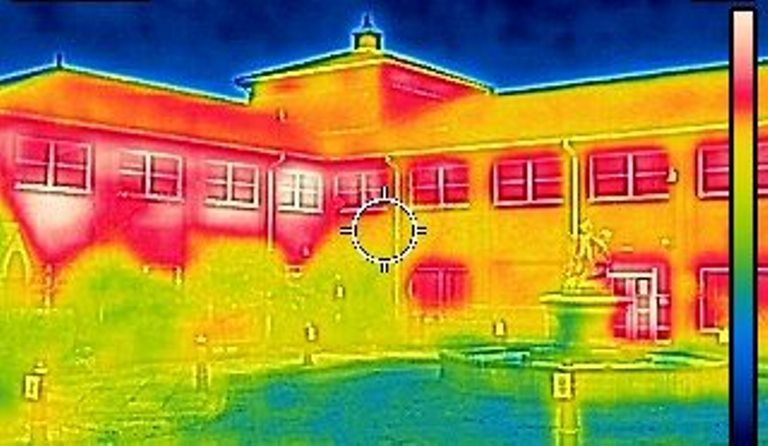
A few years ago, flush with our new toy, two members of our Energy team took a photo of Moorlands House on a Sunday in midwinter in a cheeky bid to draw attention to the building's heat loss.
To their credit, SMDC responded by buying their own heat camera to use on testing their buildings. This was a popular item on display at our recent Youth Conference.
Better still, Cllr Nigel Yates, Cabinet Member for Climate Change and Environment, when speaking to the students used the antiquated and hard-to-control heating system in the building as a good analogy for the planet's problem with overheating and the difficulties involved in bringing temperatures down.
Now that temperatures are dropping, we are making our camera available again for those who want to test the temperature leakiness (or otherwise) of their own homes.
To register an interest, please fill in the form below.
REGISTER HERE

We're pleased to be progressing with the 'soft' launch of our thermal camera, kindly funded by Leek Building Society. We're also delighted to hear that SMDC is planning something similar, although we have no details of their plans at this stage.
Having consulted with other providers of thermal imaging services (many thanks to Cambridge Carbon Footprint and Cumbria Action for Sustainability, who have both provided invaluable advice), we think our best model is to lend the camera to individuals to do their own informal home surveys, along with guidelines provided by us and pointers to free training courses. We stress of course that this will NOT be a professional service, just a tool to let homeowners get a rough idea of what might be necessary and we strongly recommend that users seek professional advice before embarking on disruptive or expensive improvements.

This poster reflects the experience of an owner survey. At this stage the Energy Group is still building up expertise and experience, so we do not claim at present that these interpretations are completely accurate and we have been advised that there are potential pitfalls in interpretation. However, the examples provide a taster of what is possible to identify likely sources of heat loss. We strongly recommend that no one takes on expensive remedial work without advice from a professional.
For this reason, we recommend that anyone who borrows our camera consults the recommended interpretation guidelines that come with it and, better still, attends a course on interpretation. We can direct you to one of these when you register to borrow the camera.
Registration Link
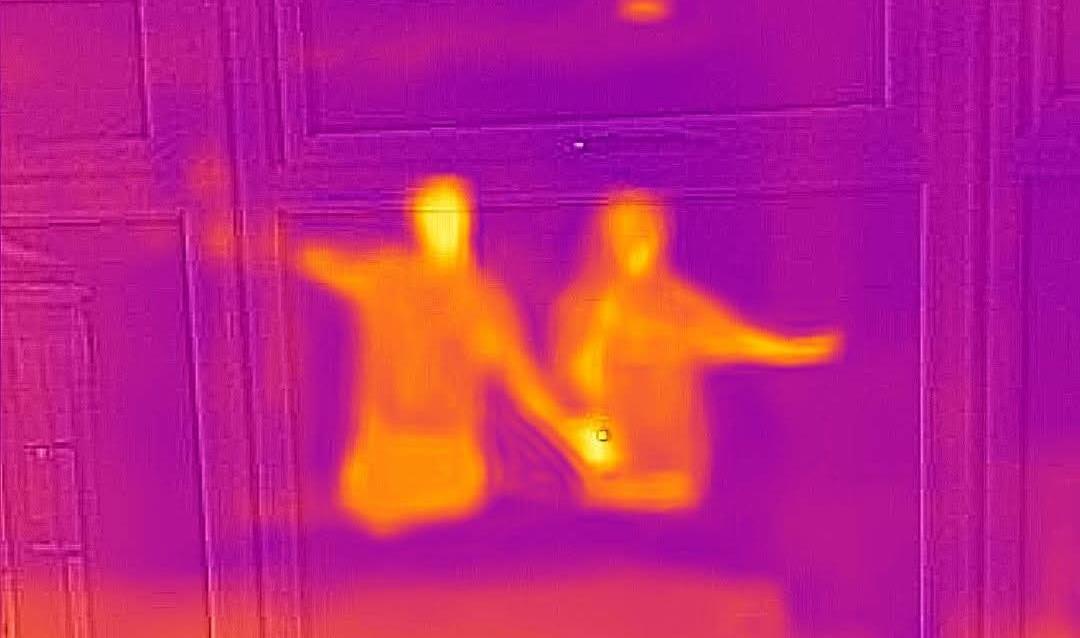
 We were excited to try out a new thermal imaging camera at our Energy Day in March. This is a valuable tool that can be used to identify hot and cold spots in buildings and help to pinpoint where insulation needs to be improved. It certainly identified cold spots at the Foxlowe (if we hadn’t already felt them for ourselves) but we also used it to identify hot spots – perhaps the hot air emanating from politicians? To be fair, the image shown above primarily shows how we lose heat from the top of our heads and how a thick head of hair or headwear can minimise the loss.
Starting this autumn, MCA’s Energy Group will be trialling a new service using this camera to help you track down problems with your home.