
As we approach the winter season, several sites have undertaken their Autumn surveys, including Cecilly Brook and Endon Community Orchard. The final school-partnered survey of the year was also carried out at Hollington Road in Tean. Several more surveys were planned for October, however once again the vagaries of the British weather played their part with dates being pushed back into November.
Work continues on the development of the NIYN Toolkit, with a face-to-face meeting held at Keele University in mid-September with representatives from all partners in attendance, including Mark and Adrian from MCA. The toolkit is beginning to take shape with an initial 20-page layout being outlined, including sections on partnership building, site selection, community group engagement and how reality does not always align with planned expectations. Regular meetings will continue to be held over the coming months and updates will be provided as the toolkit evolves.
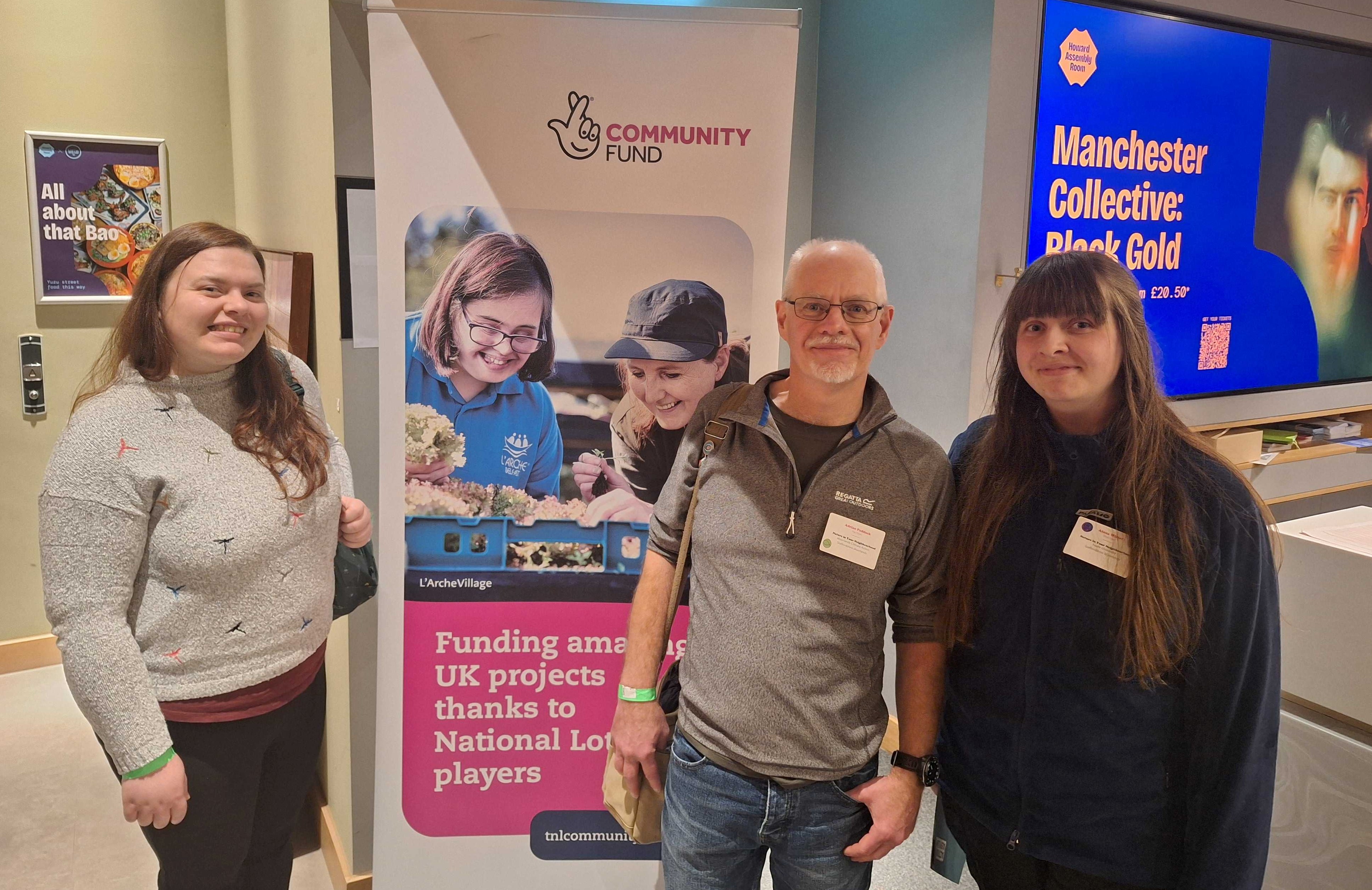
On 5 November, the second National Lottery Climate Action Fund conference was held at the Howard Assembly Rooms in Leeds. The conference brings together CAF grant holders from all over the UK to share ideas and learning and take the opportunity to hear from guest speakers, as well as participate in topic-specific group discussions. This year NIYN was represented by Alana (MCA / Keele University), Kathryn (SWT) and Adrian (MCA).
The conference started with a video from Rob Hopkins (robhopkins.net) in which he gave a message from the future (2036) of how the world could look. The vision included a world where nature and green spaces were at the heart of communities – a vision fully embedded in the core principles of NIYN. One panel session covered the role that creativity can take in climate action, reflected in NIYN with the partnership with Outside Arts and the events they have run. The discussion groups included topics around telling stories, key to our work with communities; engagement with Young People, demonstrated by our work with the school groups but we could still do more; and leaving a legacy, something we hope to achieve once the formal project runs its 5-year course and the groups continue to enhance the biodiversity across the Staffordshire Moorlands.
It’s been a busy first quarter of the third year of the NIYN project. Spring and summer seasonal surveys were carried out at the Keele monitored sites of Ladderedge, Cecilly Brook LNR, Haregate Verge (Swifts), Biddulph Country Park, Tean Jubilee Park, Grindon and Rudyard Lake. Surveys were also undertaken at the community led sites at Ball Haye Recreation Ground, King’s Coronation Meadow (Longnor) and Endon Verge (A53). Many surveys were supported by MCA members.
The Westwood Recreation Ground and Hollington Road sites also did their Summer surveys. In both cases these surveys involved pupils from the local schools which is encouraging to see, as is the involvement of local community members at other sites.
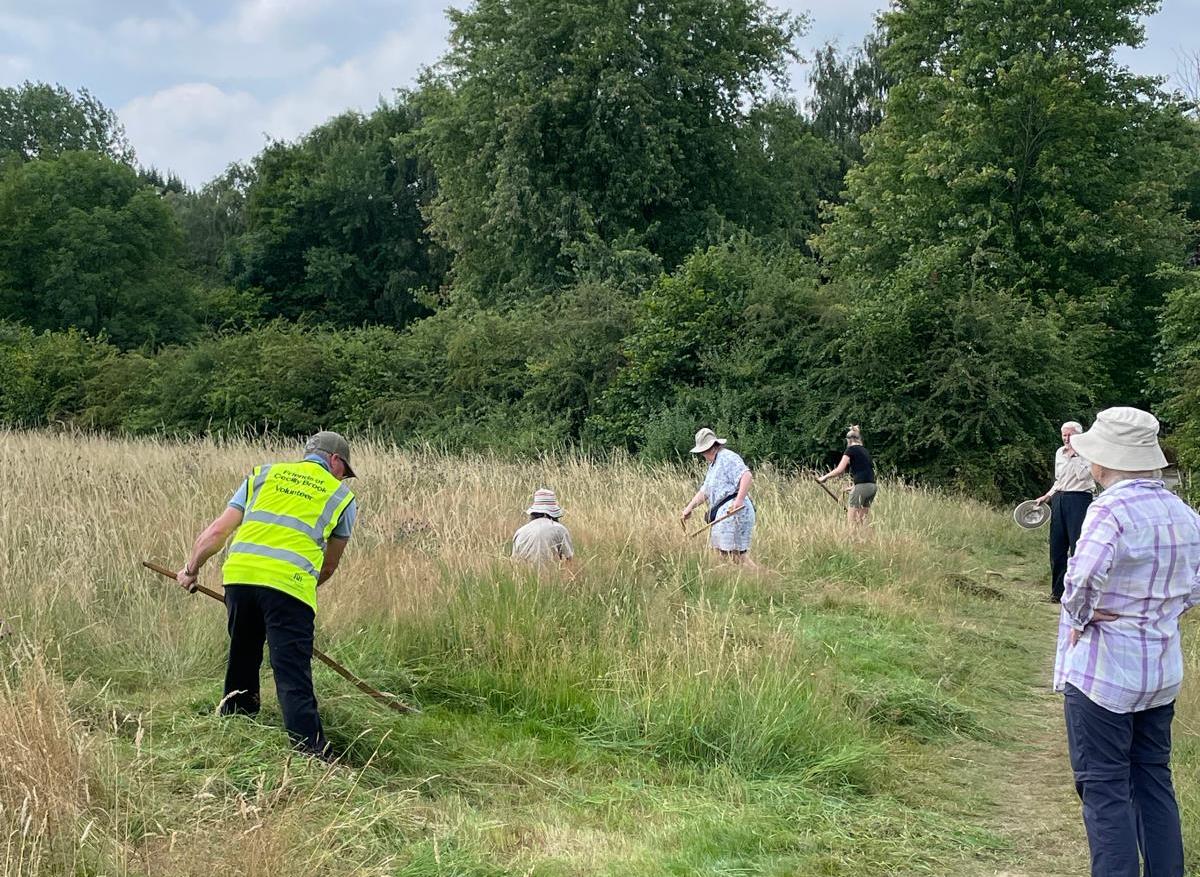
Staffordshire Wildlife Trust continued to run training sessions associated with the site management aspects of the project. In mid-July, for example, a scything workshop was held at Cecilly Brook LNR which was attended by MCA members as well as representatives from the ‘Friends of Cecilly Brook’ group. The session was led by two ladies from Staffordshire and Cheshire Scythers who took the group through the preparation stages of peening (sharpening) the blade, the correct way to set up the snath and nibs and finally the skilful art of scything itself when the group got to practice on a section of the wildflower meadow on the reserve. The training certainly came in useful as within a few days the skills were needed when volunteers mowed the Haregate Verge.

As the Nature in Your Neighbourhood project came to the end of its second year, MCA members continued with their engagement with several of the Tier 1 locations that form part of the Keele University study. Having completed the last seasonal surveys of 2025, focus moved on to further formulating the Management Plans for the development of the sites.
For Haregate Verge (Carlton Terrace Crossroads / Swifts of Leek) this involved finalising the timetable for key tasks to be undertaken in Spring 2026. The main task was to select the best mix of plants and to source the wildflower plugs. In addition, MCA member Kate Hamey (site sponsor) had to negotiate the complexities of public liability insurance and risk assessments. Kate worked closely with fellow MCA members, SWT partners and representatives from SMDC and Your Housing to ensure everything was ready to go for early April 2026. Immediate neighbours were kept informed of progress by individual letters and site specific signs designed to ensure the local community would be informed about the work being undertaken and to encourage their participation.
The plants arrived just after Easter and a small army of stalwart volunteers, together with SWT workers, worked hard to plant the 1500 plugs within a few days. Successful negotiations with Highways and the mowing contractors meant that the “Don’t mow, let me grow” signs were observed and the verges are now resplendent with the existing dandelions, daisies and cuckoo flowers, while the new plug plants establish themselves.
Another site associated with MCA through member representation, is Cecilly Brook LNR in Cheadle. Again, the focus was on finalising the Management Plan. For this site, the local volunteer group wants to enhance the wildflower meadows as well as encourage willow tits to establish a stronghold by creating a wetland area through digging small scrapes. During early 2026, yellow rattle seed was sown in the meadow area and bramble removed and cut back.

Nature in Your Neighbourhood is halfway through its second year, and MCA members were once again heavily involved in the next phases of the National Lottery-funded project.
Baseline surveys for most of the sites were completed earlier in the year and now the focus has moved on to one or more seasonal surveys. Once again members were on hand with their quadrats, field guides and general enthusiasm to observe and record what the sites had to offer during the late summer and early autumn period.
Completed in partnership with Staffordshire Wildlife Trust, Keele University and members of the local groups affiliated to the sites, these surveys form a key part of understanding how each site changes as the year moves through its seasonal cycle. Members were keen to build on their surveying skills and knowledge, whilst enjoying the vagaries of the British Summer!
But as always, the sun shone on Haregate when Swifts of Leek members did their surveys on the junction site near the bottom end of Carlton Terrace. Because this site is on land managed by the county council and is highly visible to residents, it brings its own issues. But local people have been enthusiastic about what we aim to do - even lending a hand with the surveys - and it was always a priority to have at least one of the project sites in an urban setting.

The Nature in Your Neighbourhood project moved into its second year in April; Moorlands Climate Action volunteers got their hands dirty and started sampling on site – and they loved it! After a year of preparation and publicising the project, there was a real feel of beginning to do what our members love best – improving nature in their neighbourhood. For a very few volunteers it meant brushing up on old skills. “I haven’t handled a quadrat for years and it was nice to get back to something I really enjoyed doing,” said one. “Particularly as I was doing it on land I pass often, just round the corner from my house!”
But for most, learning how to survey and record was brand new. “I’m an amateur gardener but I love this, it’s really different,” was the verdict of another volunteer. “It’s amazing what you see when you have to get up real close and make sure you don’t miss anything.” Those who participated in more than one survey found the ability to compare conditions particularly instructive, for example soil quality and water retention.
One common theme was that learning together was actually fun – people could laugh at small mistakes in site drawings or identifying the wrong plant. This sense of team effort was amplified by the reaction of passers-by and, for the urban sites such as the Haregate estate, immediate neighbours. Dog walkers stopped to chat about what we were doing and residents even started talking about what they were doing in their own gardens and asking for advice! In the urban examples it was heartening to attract a small number of volunteers from outside the group (and outside the normal demographic). In one case a young girl was brought to look at the survey by a local friend of an MCA member and ended up staying the afternoon to take a full part in it.
An ex-council estate is perhaps not the easiest territory to attract volunteers to anything that is seen as coming from ‘outside’ (and initial engagement events struggled) but once we moved onto the ground it became clear that love for nature was as strong here as anywhere. Perhaps the best most satisfying moment was to hear (from a Haregate resident): “It’s brilliant you’re doing it here.”

Last year we reported the launch of this project, spearheaded by Staffordshire Wildlife Trust and supported by Keele University, SMDC, Outside Arts and ourselves among others. Work has now started on the selected sites for the project and we are currently doing the baseline surveys that are needed to record progress over the coming years. Most of this is done by volunteers from MCA, Staffordshire Wildlife Trust and members of local community groups who are supporting their ‘patch’.
The surveys involve identifying different plant and animal species, recording their locations and taking soil and water samples where appropriate. Project staff have been running training workshops but it’s not too late to get involved - via
Baseline surveys done so far include sites in Cheadle, Tean, as well as Haregate and Woodcroft in Leek. Swifts of Leek are supporting a second site in Haregate, known for its vibrant swift population, but they will be doing the full vegetation and soil survey as well next week, with guidance from the Project’s PhD researcher, Alana Wheat. They're fun to do and usually there's plenty of opportunity to engage with passing members of the public who are intrigued to know what we're up to. What better way to engage with nature in a constructive way!