
As we approach the winter season, several sites have undertaken their Autumn surveys, including Cecilly Brook and Endon Community Orchard. The final school-partnered survey of the year was also carried out at Hollington Road in Tean. Several more surveys were planned for October, however once again the vagaries of the British weather played their part with dates being pushed back into November.
Work continues on the development of the NIYN Toolkit, with a face-to-face meeting held at Keele University in mid-September with representatives from all partners in attendance, including Mark and Adrian from MCA. The toolkit is beginning to take shape with an initial 20-page layout being outlined, including sections on partnership building, site selection, community group engagement and how reality does not always align with planned expectations. Regular meetings will continue to be held over the coming months and updates will be provided as the toolkit evolves.
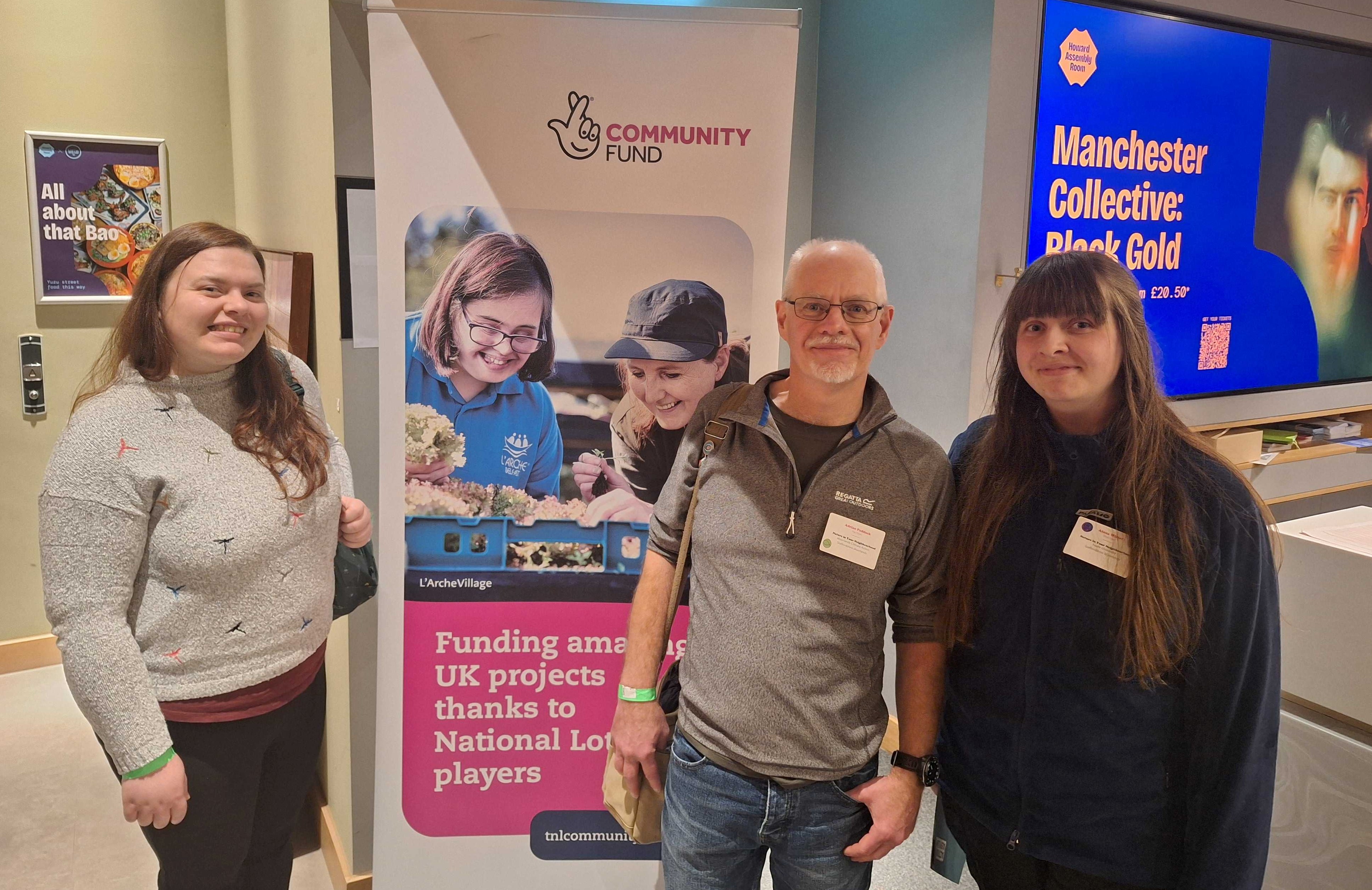
On 5 November, the second National Lottery Climate Action Fund conference was held at the Howard Assembly Rooms in Leeds. The conference brings together CAF grant holders from all over the UK to share ideas and learning and take the opportunity to hear from guest speakers, as well as participate in topic-specific group discussions. This year NIYN was represented by Alana (MCA / Keele University), Kathryn (SWT) and Adrian (MCA).
The conference started with a video from Rob Hopkins (robhopkins.net) in which he gave a message from the future (2036) of how the world could look. The vision included a world where nature and green spaces were at the heart of communities – a vision fully embedded in the core principles of NIYN. One panel session covered the role that creativity can take in climate action, reflected in NIYN with the partnership with Outside Arts and the events they have run. The discussion groups included topics around telling stories, key to our work with communities; engagement with Young People, demonstrated by our work with the school groups but we could still do more; and leaving a legacy, something we hope to achieve once the formal project runs its 5-year course and the groups continue to enhance the biodiversity across the Staffordshire Moorlands.